Showing posts with label Hybrids. Show all posts

Friday, May 18, 2012

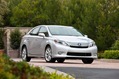
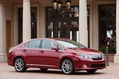
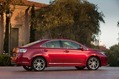
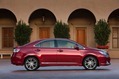
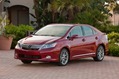
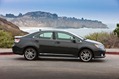
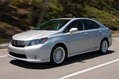
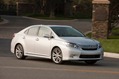
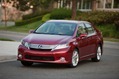
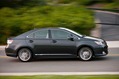
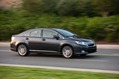
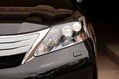
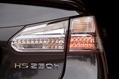
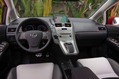
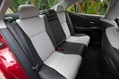
Lexus Ceased Production of HS 250h in 2012

Just because the Toyota Group is the king of hybrids does not mean that all of its products are a runaway success. Take Lexus' HS 250h dedicated hybrid sedan, which was introduced in North America in August of 2009, for example. In 2010, Lexus sold a mediocre 10,663 units of the HS 250h, which at the time was priced from $34,200. The following year was worse, much, much worse with sales plummeting 73 percent to a pitiful 2,864 units or less than 240 cars per month.
Apparently, Lexus evaluated that sales would not get any better so it made the decision to quietly pull the plug on the HS 250h. In a response to an email from InsideLine, Lexus told the website that it ended production of the HS 250h in January.
"Production of the HS 250h ceased in January, 2012. Lexus continues to monitor sales for each product and we make adjustments to make sure that we meet market demand, and the discontinuation of HS was part of that adjustment," said Lexus in a statement.
Interestingly, the company noted that the new ES 300h will not take the place of the HS 250h.
"The ES 300h is not replacing HS in our lineup. It's merely part of the hybridization of many of our existing vehicles in the Toyota and Lexus lineups."
Lexus still has the HS 250h listed on its website at $37,030 excluding handling and destination, most likely because it has yet to deplete its inventory.
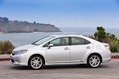
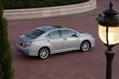
PHOTO GALLERY

2012-Lexus-HS-250h-12012-Lexus-HS-250h-42012-Lexus-HS-250h-52012-Lexus-HS-250h-62012-Lexus-HS-250h-72012-Lexus-HS-250h-82012-Lexus-HS-250h-102012-Lexus-HS-250h-112012-Lexus-HS-250h-122012-Lexus-HS-250h-132012-Lexus-HS-250h-142012-Lexus-HS-250h-152012-Lexus-HS-250h-162012-Lexus-HS-250h-192012-Lexus-HS-250h-202012-Lexus-HS-250h-212012-Lexus-HS-250h-222012-Lexus-HS-250h-232012-Lexus-HS-250h-242012-Lexus-HS-250h-252012-Lexus-HS-250h-262012-Lexus-HS-250h-272012-Lexus-HS-250h-302012-Lexus-HS-250h-312012-Lexus-HS-250h-322012-Lexus-HS-250h-332012-Lexus-HS-250h-342012-Lexus-HS-250h-352012-Lexus-HS-250h-362012-Lexus-HS-250h-372012-Lexus-HS-250h-382012-Lexus-HS-250h-39

Sunday, March 25, 2012

GM Replacing 120-volt Charging Cords on Most Chevy Volts, but Don't Call it a Recall

All owners of the 2011 Chevrolet Volt and some of the 2012 model will soon be notified by GM to replace their 120-volt charging cords with new ones after certain consumers complained about overheating problems. GM spokesman Randal Fox told Reuters that he did not know the total number of the vehicles affected, but said it was fewer than the 11,000 or so Volts sold so far in the States. He also made a point to note that this was not a safety recall.
"It's just an effort to offer a more consistent charging experience. It's not a safety recall. It's more of a customer-satisfaction program," Fox said.
"We made some enhancements to the design to add some durability and reliability. For example, GM increased the cord's cable size to enhance durability," he added.
In most cases, Volt owners will receive the new cords when they bring their cars in for the battery enhancement's to address safety concerns over fires, according to Fox. He added that the new 120-volt cords will not change recharging time and the swap does not involve the 240-volt cords.

PHOTO GALLERY

Sunday, February 19, 2012

New Owner Plans to Resurrect Studebaker with a Hybrid Twist in the 21st Century


Even though you may know the name and perhaps even seen one of its models, chances are that you were either too young to remember or not even born yet when the Studebaker Automobile Company closed shop in 1966. Fast forward to today and the company may have a second chance in life - hopefully with better designs than the official CGIs you see here... According to a report from FoxNews, Ric Reed, who bought the rights to the Studebaker brand in 2001, has revealed new plans to resurrect the famous nameplate.
Reed, who runs the Denver, Colorado-based Big Kahuna apparel company, told the news site that he wants to revive Studebaker's classic monikers such as the Lark, President and Hawk for the new model series, adding, however, that the cars themselves will be 21st-century hybrids.
"As the entrepreneur at the helm of Studebaker Motor Company, it is my earnest goal to create vehicles that are in some way reminiscent of classic Studebakers, or in other words, definitively Studebaker, yet brought into the 21st Century, and again to see Studebaker Motor Company the American Icon it once was," says Reed on the company's website.
"It is also my dream to develop or reopen factories, employ Americans in those manufacturing and assembly plants, which shall be on American soil. I desire to make vehicles that not only compete, but have a significant cutting edge in a highly competitive world market," he adds.
Reed said he wants to employ hybrid technology because he thinks that electric cars still have a long way to go. He intends to use the Hydristor, a device invented by Tom Kasner for a sports car that John DeLorean wanted to make before his demise. The Hydristor is a hydraulic transistor, which Kasmer claims, is akin to a highly efficient CVT gearbox.
Before rolling out his brand-new models, Reed says he may cooperate with another, yet unnamed company, to build a US$70,000 limited run of a retro-themed modern iteration of the Chump pickup truck in order to raise some cash and mainly attract investors.

Saturday, October 29, 2011

BMW Reveals Sixth Generation of 3-Series Sedan

It’s official; as promised, BMW unveiled today the brand-new 3-Series codenamed F30. The sixth generation of its compact luxury sedan, which in its five iterations since its launch in 1975 has sold more than 12 million units becoming the standard in its category, will be available to markets worldwide from February 11, 2012. According to BMW’s CEO, Norbert Reithofer, the new 3-Series is “the sportiest car in its segment and offers sheer driving pleasure at the highest level”.
The sixth generation mid-size BMW has grown considerably compared to its predecessor. It is 93 mm longer and an augmented wheelbase at 2,810 mm (+50mm) as well as wider front (+37 mm) and rear (+47 mm) tracks. The increase in dimensions promises to address one of the model’s disadvantages compared to the competition, namely that of rear passenger space.
The new model now offers 15 mm more legroom and 8 mm more headroom for rear seat passengers. Yet, despite the increase in size, numerous weight saving measures help make the new 3-Series up to 40 kg (88 lb) lighter than the model it replaces (depending on the version).
BMW’s best-selling model will initially be offered at launch with four TwinPower turbocharged engines: two petrol and two diesel units, which are available with two transmissions, a six-speed manual and an eight-speed automatic, the latter being a first in its class.
The gasoline range comprises of the 328i and 335i, both equipped with the fuel-saving EfficientDynamics package. The 328i is powered by a twin-turbocharged 2.0-liter 4-cylinder with direct injection, twin-scroll turbocharging, double-Vanos variable camshaft timing and Valvetronic variable valve timing.
It delivers 240HP and 350 Nm (258.1 lb-ft) of torque from 1,250-4,800 rpm. As a result, the 328i accelerates from 0-100 (0-62 mph) in 5.9 seconds and reaches an electronically-limited top speed of 250 km/h (155 mph), while its fuel consumption of 6.4 lt/100 km (36.7 mpg US) with the 6-speed manual gearbox (6.3 lt/100 km – 37.3 mpg US with the auto) is 11% lower than its predecessor.
Under the hood of the 335i lies a turbocharged inline-six with 306HP and 400 Nm (295 lb-ft) of torque delivered from 1,200-5,000 rpm. It sprints from 0-100 km/h (0-62 mph) in 5.5 seconds while, like the 328i, it tops out at 250 km/h (155 mph) due to the electronic speed limiter. The 335i’s average consumption is 7.2-7.9 lt/100 km (32.6-29.7 US mpg) depending on specification.
Most European buyers will be interested in the 184HP 320d and the 163HP 320d EfficientDynamics turbodiesels. The more powerful engine accelerates the 3er from 0-100 km/h (0-62 mph) in7.5 seconds, tops out at 235 km/h (146 mph), consumes 4.5 lt/100 km (52.2 mpg) of fuel and emits 118 g of CO2 per km.
In the 163HP EfficientDynamics diesel version the corresponding numbers are 8.0 seconds, 230 km/h (143 mph), 4.1 lt/100 (57.3 US mpg) and 109 g/km.
In spring of 2012, three new engines will be added to the line-up: one petrol and two diesels. The gasoline model is the 320i and it's powered by a 184HP and 270 Nm (199.1 lb-ft) version of the 2.0-liter TwinTurbo. The two turbodiesels will be the 116HP and 260 Nm (191.7 lb-ft) 316d and the 143HP and 320 Nm (236 lb-ft) 318d.
Later on, the new 3-Series will also get more engine variants, among them a six-cylinder diesel, and all-wheel drive xDrive versions, while in the autumn BMW will launch the ActiveHybrid 3 using the same hybrid powertrain as the new ActiveHybrid 5.
The full-hybrid version of the 3-Series will combine the 306HP 3.0-liter TwinTurbo petrol engine with 40kW/54HP electric motor integrated into the eight-speed auto transmission. Maximum combined output and torque are 340HP and 450 Nm (332 lb-ft) respectively, and its average fuel consumption is 6.4 lt/100 km (36.7 mpg).
The new 3-Series will also feature the Driving Experience Control system that in addition to its three basic modes, Comfort, Sport and Sport+, offers an Eco Pro setting that can reduce consumption up to 20%.
The sedan model features a double-joint front axle with aluminum struts and wishbones that reduce unsprung weight and a rear multi-link arrangement. There's also a new electromechanical system that is said to offer increased agility while minimizing weight and fuel consumption.
For the first time, three BMW’s new sedan will be offered with three different configurations named Sport Line, Modern Line and Luxury Line that allow buyers to customize their car.
They can also opt for the M Sport package which adds 10 mm (0.4 inch) lower as well as firmer suspension, harder anti-roll bars, 18- or 19-inch M alloy wheels, chrome exhaust pipes, exclusive bodywork paint and sport interior trim.
Of course, there will be a long optional equipment list with features such as the Adaptive M Sport suspension, Head-Up Display, ConnectedDrive infotainment system, Active Cruise Control with Stop&Go, parking assistant, real-time traffic info and the lane change and lane departure warning systems.
BMW has invested over €1 billion ($1.38 billion US) in the new 3-Series global production. It will be manufactured at the company’s plants in Munich and Regensburg in Germany, as well as in Roslyn, South Africa.
In Germany, prices will range from €35,350 for the 320d and €43,600 for the 335i.


PHOTO GALLERY

 
Design by Free WordPress Themes | Bloggerized by Lasantha - Premium Blogger Themes | Skull Belt Buckles